breakinglight11: (Default)
Felt like doing something a little saucy. I’m deeply embarrassed. ;-)

It is kind of weird writing stuff like this when you picture the characters as being depicted by your friends. I like mashing the dollies together, but still…

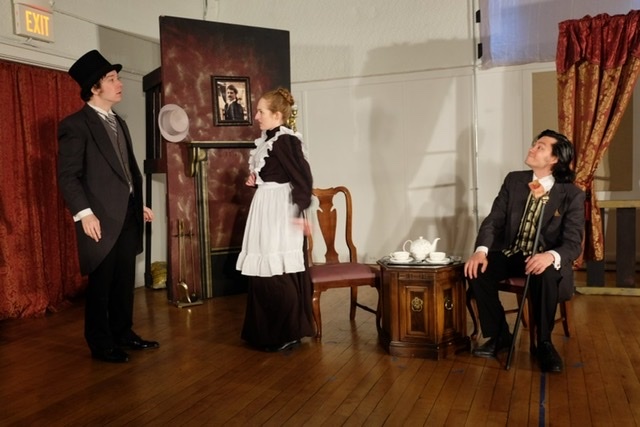
Crackling interplay
Photo by John Benfield


Day #30 - Brazen )
breakinglight11: (Default)
On Facebook, I frequently see ads for different companies that provide... let’s say romance content. Novels, comics, stuff like that. They’re clearly self-published and not high quality— they give you a sample chapter in the post, and they are too amateurishly written and poorly edited to be anything else. Whatever, there’s a lot of self-publishing in the Internet age. But even across different companies or mediums, there’s one element they absolutely all have in common without exception— a really prominent and explicitly codified element of coercion.

All of them. Every single one. They’re all heterosexual, and the woman is always sold, obligated, carried off, or biologically destined for the male romantic and sexual partner. I know this sort of thing has always been at least an undercurrent in the romance genre, at least the “sexy ravishment” kind, where the butch hero absolutely has to have the female protagonist, and his desire is part of the measure of her personal value. My view on the appeal of it is well explained in a line of Meredith’s in Dream Machine episode 2: “Sometimes... when you’ve spent your life afraid of being a slut... the only way you can enjoy yourself is when the decision is taken out of your hands.” It’s a way for women, the usual target audience, to indulge in a romantic fantasy like when they have a hard time conceiving of themselves taking any kind of sexual agency,

But in these on Facebook, the element seems even more literal and spelled out than that traditional “sexy ravishment.” The coercion is front and center, an explicit part of the scenario— “I am assigned to this man and there’s nothing I can do about it.” She’s sold to him. She’s in an arranged marriage. She’s marked by pheromones. Et cetera. Et cetera. I know there’s a market for that... but do these online romance novel companies produce no other kind of romance? Why are they ALL like that? It seems really... retrograde? Like, even less conscious of rape culture than the romances of generations past, as if it assumes that all women just really want to be relieved of the responsibility of choosing their own mate and just want to be handed over to a dominant man.

And I’m really not getting the draw here. I can get the “I’m flattered by how badly he wants me” aspect. I can even grasp the “he is the instigator and I am not responsible” or “we don’t need to discuss or establish consent for this because we are just so compatible” aspects. I DO NOT understand the appeal of the “I have literally no choice or say in this at all” idea. What is speaking to women in that? Is it the notion that you don’t have to look for your soulmate or doubt that you’ve found him, because that’s been pre-decided for you? Is it the assumption that more appealingly masculine men just take what they want? Is it just a thinly-veiled submission kink it’s assuming of the entirety of its readership?

I guess everybody’s got their kinks. I don’t even think there’s anything wrong with enjoying problematic storytelling tropes, as long as you understand what their meaning is outside of the world of fiction. But these are so SPECIFIC to something that seems to make such an unfair assumption of what women are like or what appeals to them. Is the product designed for a market that niche? But it certainly shows up for me just because I’m a woman, and I can’t imagine they would have so little variation in subject matter unless they thought that’s just what all or most women wanted.
breakinglight11: (Default)
October Review Challenge, #19 - "What’s a side character who turned out special?"

This is, without a doubt, Justin Hawking from the Mrs. Hawking series. He’s one of my favorite characters I’ve ever written. He is the charming, globetrotting elder brother of lead character Nathaniel Hawking, and designed to act as a foil to him. Where Nathaniel craves approval, Justin has turned not caring what people think of him into a lifestyle. Nathaniel is conventional, Justin is radical. Nathaniel is a mild-mannered monogamous father, while Justin is a bisexual libertine who’ll try anything once. It turned out I loved writing their interactions; I found giving them a push-pull between being there for one another and trying to get each other’s goat made for a very compelling relationship.

He’s just so charismatic and fun. He first appeared to needle everybody in part III: Base Instruments. I liked how he was sexy and fearless about it; again it made a nice contrast to the rest of the prudish and goody-goody cast. And I liked how he challenged them on their preconceptions, given his boldness in the face of social convention and his understanding of the artificiality and falseness of it. Still, we gave him a bit of extra dimension by revealing he’s sensitive to the fact that he’s the black sheep of his family, and Bernie suggested giving him a romantic history with Nathaniel’s wife Clara, to add an extra layer of complication.

I missed him since retiring Base Instruments from rep. He was played by Eric Cheung and Christian Krenek, each in their own way but both with a lot of charm. So, when Bernie and I wanted to go lighter and funny for our Hawking show this year, we decided it was finally time to bring him back— specifically in his own spinoff, the Wodehousian romantic comedy Gentlemen Never Tell. It allowed us to not only enjoy his fun and humorous qualities, it let us explore him a little bit more deeply. In this story, in addition to being funny, we let him confront his privilege as a wealthy libertine, and confront the fact that a lot of people see him as a user, as well as get to demonstrate his bisexuality in a meaningful way.

We’ll be putting that show up for the first time this fall. Christian plays Nathaniel these days, so Eric will be returning to bring him again to life. I’m really excited to be returning to him. I think it’s going to be a lot of fun.


Photo by John Benfield
breakinglight11: (Default)
This scene is another from Justin’s Wodehousian comedy adventure, meant to directly follower the opener #8 - “A Caper in Venice”, depicting Justin and his valet Peter Morgan arriving for the house party that will be the setting for the story.

This scene’s a little awkward. It’s got some clunky exposition and probably isn’t quite funny enough and needs punching up. But it’s intended to not only set the scene, but introduce you to what Justin and Morgan are like as people, and how they interact with each other. Justin is a whimsical, roguish free spirit who enjoys stirring up trouble and lives outside of convention. Morgan is his friend and loyal retainer, who attempts to be his voice of reason while he still supports him and backs him up, but is kind of his straight man and is noticeably more cautious. I also want to seed the problem dealt with in #10 - “On Your Terms” and #11 - “Need Someone”, where they care about each other, but the dynamic is not equal, and Justin is sometimes cavalier with that.

Also, notably, this show we will have the space to depict Justin as visibly bisexual. He always has been intended to be kind of a Kinsey 1 or 2, but in his previous appearance in Mrs. Hawking III: Base Instruments, it was tricky to make it present given his role in the story. Christian Krenek, the second person to portray him, had some good ideas to manifest it in small ways, but Justin would not be able to be terribly open with it in that company. While we want to make it part of his character and keep the story from getting too bogged down in the bigotry of the period, which would make the story a lot less fun, we also don’t like the idea of the characters reacting to it like modern people. So we’re trying to split the difference to have a little fun with it, without throwing the Victorian milieu out the window.


Photo by John Benfield


Day #14 - Man of Philosophy )
breakinglight11: (Default)
Forever Captain:
“His Part to Play”
By Phoebe Roberts
~~~

Summary: “Steve Rogers has retired to the 1940s to build a new life with Peggy. In leaving behind the mantle of Captain America, at last he’s got a measure of peace. Still, Steve will never stop feeling the responsibility to step up as a hero— except he's not sure how much power his actions have at this point in the timeline. Somehow he must reconcile his new life and identity with the responsibility and burden of being a hero out of time.”

Chapter summary: Steve and Peggy's first days reunited in the midcentury post-Endgame.
breakinglight11: (Default)
Well, I've done it. As you may have seen on Facebook, yesterday I completed the first draft of the novel I've been working on, converting the story from my "Adonis" screenplay into a full-length prose form.

He's very proud of me

Artist's dramatization of actual scene from novel


I got very close last week, and completing it had started to obsess me. I had managed to get it down to one remaining scene, so yesterday I locked myself in my room and didn't let myself leave until I had it finished. My goal was one continuous story, not necessarily a good one, but a technically "complete" one, that flowed from beginning to middle to end. It came out to just barely under 43,000 words, in thirteen chapters plus a prologue. Not a very long novel— probably will ultimately need to be longer —but I think it's the longest continuous thing I've ever written.

Word count is a weird metric of length to me, as a dramatist. Drama never has a fraction of the word count prose does, and doesn't correspond to runtime nearly as much. In screenwriting, there's a rough one to one ratio of page count to minutes it takes to play out. Plays don't have standard formatting; you kind of have to work it out for yourself. But the sheer volume of words required for a full-length novel was pretty staggering to me. By contrast, all five Mrs. Hawking plays together total about 63,000 words— much smaller on average given the amount of work they represent.

Writing the book was very much not easy for me. As I've been complaining, I find prose to be incredibly difficult. Describing what happens in a way that doesn't feel overwrought, excessive, and awkward is much harder to me than designing the action (like one does for any sort of story) then expressing it in dialogue and a few stage directions to be built upon by performers. My first drafts tend to be wordy at the best of times, but I often felt unable to convey what was going on in a manner that didn't seem overexplained, or execessively formal. I tried not to worry about that too much at this stage, as too much attempt to edit as you go gets in the way of completing a first draft, but as a result the prose goes off the rails in a lot of places.

This is all to say I am very much not happy with the book right now. It's not representing the story the way I want, and the level of the writing is not up to the standard I want to put forward. It's the worst example to date of the problem I feel like I struggle with most frequently in my writing, that I did really great work building the story, but the words I used to express it are bad and wrong.

I can do pretty solid dialogue at this point, as drama has honed my ability for it through practice. But for someone as thoroughly verbal as I am, I find word use to be ABSOLUTELY THE MOST DIFFICULT PART of writing. Coming up with the ideas, what happens, the mechanical functionality of how the tools of narrative work? I'm awesome at that. Picking the right words that are pretty and expressive enough for narration? That's a brutal struggle.

I know this is part of the process. Drafting has allowed me to make good work time and again, and I know myself well enough to know that I'm better off having a finished first draft that I can iterate on than trying to edit everything until it's perfect before moving on. I never fucking finish anything if I try to work the second way. So history suggests that even just getting to this point is a HUGE step forward in ultimately making a good piece.

Right now, though, all I want to do is pick at it. I am keenly aware of its shortcomings in its current state, and I have a hard time leaving a project alone if I know it still needs work. But I have to get some distance from it, or I'll never be able to effectively think of new ways to convey my ideas where it's needed. So what I have resolved to do is not even LOOK at it again for at least two weeks. I put the first allowable date to return to it on my calendar. Hopefully in that time I'll forget what I was trying to do and be able to evaluate what I did do.

What has worked well for me in the past in writing plays and screenplays is to puke out a first draft, take some time away from it, then attempt a second draft on my own before I show it to anyone. I am definitely going to need outside feedback on this, and I've even got a few very generous people in mind. But I'd be embarrassed to show it to anyone in its current form, so I absolutely want to see if I can improve the quality of the prose before I do that. "The writing is bloated and awkward," is not feedback I'm looking for, 'CAUSE I ALREADY KNOW IT IS.

But I do need help to see if I've really used the novel form to its fullest. The overall story is one Bernie and I labored over when we were writing the screenplay and I'm very proud of that part of it. But it is very lean and focused, in the manner that stories for the screen must be, and it probably requires more expansion and fleshing out to really take advantage of the novel form. And I'm not a hundred percent sure I paced it in the manner a novel should be— the screen must move fast, and it may still feel too rushed. Still, I feel far and away the biggest problem is the quality of the prose.

It's also got sex scenes, which I feel... some type of way about. I really do feel like, given the subject matter, they need to be in there. But they're certainly not my forte, as they don't require a lot of specifics in drama. In this case, my trouble is compounded by two issues. The first I wrote about back in 2014 and unfortunately not much has changed— I'm a big child about sex scenes and feel embarrassed, like somebody's going to judge or laugh at me for how I conceive of them. I worry about this even when I choreograph intimacy on stage, that somebody will find something I designed to seem sexy to be weird, silly, or even creepy. The second issue is that the setting of this piece in particular in an alternate-world ancient matriarchy, with entirely different power dynamics between the genders. Any sex scene I write in that world is going to have to meaningfully incorporate that difference in dynamics— but it's still got to take into account my audience's frame of reference comes from being socialized in patriarchy. I mused on this issue in 2015— I need my story's interactions to feel like they're from the different world, while STILL communicating in a way my audience can understand if I want them to get the right impression. THAT'S HARD.

I am trying to keep sight of the fact that it's an accomplishment that I finished. It was a lot of work, it was hard for me, and I finished. That's a big deal. I have always had a hard time celebrating accomplishments like that if I'm still not feeling good about the product's quality. But, one step at a time. I made something new, from an idea that is important to me, in a form I've never worked in before. And I am that much closer to making it something special.

That's something.
breakinglight11: (Default)
I don’t write about queerness much. As a straight woman, my perspective is not one people really need anyway. I try to include queer characters because I don’t want to be exclusionary and because it’s more reflective of the reality of the world, but because I don’t have much to say about queerness, that part of those characters is rarely a point of focus.

The only exception for me is ace characters. My most prominent heroine of Mrs. Hawking is not only an aro ace, but it’s plot-relevant, as it makes it a point of disconnection in her initial friendship with the Colonel, and she actually even articulates it to explain the frustration she feels with a culture that doesn’t understand people like her.

For some reason, however, I’ve always been very interested in asexuality. Maybe you could say I “relate” to it— though I’ve written about how limited I find that form of creating emotional connection —because for my teen years I thought I might have been asexual. I very much am not— and if I look back with honesty, I was not, even then, mistaking not experiencing attraction in the way I thought most people did for not experiencing it at all. So maybe saying I “relate” isn’t accurate.

But even in recognizing that, I’ve always found something kind of cool about it. While I’m very straight and enjoy owning that in my own particular way (read: grossly objectifying handsome muscular men) there’s a part of me that finds asexuality kind of powerful and aspirational. My interest in men gives me an investment in men being interested in me, and that makes me put a lot of time and energy into ensuring that happens. The idea of being asexual, and not caring who was attracted to me, of not needing that particular form of validation, has an appeal. It feels strong to me, in a way.

So I always enjoy the rare occasion of characters who are asexual, and that’s why I made Mrs. Hawking asexual. She’s in many ways a power fantasy for me personally, and that’s one aspect of it. I’ve done my best to depict it in a believable way, and I’ve gotten some positive feedback from some actual asexual people, including Frances Kimpel, the first actress to portray her. I hope she feels real. But for whatever reason, it’s the only sort of queerness I’m inclined to center. Because somehow, for whatever reason, it speaks to this otherwise aggressively het girl.

Crush form

Jul. 13th, 2016 03:07 pm
breakinglight11: (CT photoshoot 1)
Having some thoughts, not totally formed, on a concept you hear about but isn’t that well defined. Excused how rambling and inconclusive I’m being because of it.

People talk about formative influences, the stuff we experienced as children that shaped our outlook, nature, or tendencies going forward. One kind in particular is when we’re just starting to grow into our sexualities but they haven’t really been formed yet, and we develop an early awareness of the hotness of people. And I don't just mean childhood crushes, which can be purely affectionate in nature. The joke people make is, usually when referring to some sexy figure from entertainment we liked when we were children, is “That’s the moment that I went through puberty.” Or something like that.

Obviously this is an exaggeration. Rarely does one lightning-bolt moment set things in stone going forward. But there’s definitely a sense of holding on to the experience of finding somebody attractive for the first time, or one of the first times, at an early age. The classic example I can think of is the way certain men talk about having seen slave Leia in the Star Wars movies as kids— it’s not like everything changed for them in a moment, or resulted in anything particularly specific, but it made an impression that stayed with them to this day.

But when people talk about this, they’re pretty much always talking about it happening to boys, not girls. For girls, the closest analogue to this phenomenon seems to be the “teen crush,” when young girls obsess over some celebrity, such as the New Kids on the Block, Justin Beiber, or One Direction. However, in these cases, the target of these crushes is usually presented in a desexualized manner, and the girls’ feelings are characterized as affection rather than lust. I’m trying to think if there are any exceptions to this, and the only one I can really think of is Elvis, who was not considered as neutered as some of the other teen heartthrobs seem to be.

I’m wondering why this is. The answer may be simple misogyny, treating male sexuality as a given while erasing female. Like, some might say that girls do not have the kind of visual responses to attractive people the way that boys do, and are therefore unlikely to be so affected simply by hotness, but more by emotion, affection, and validation. But as I’ve mentioned, I reject the notion that girls are inherently different than boys. Socialization does of course play a role, and perhaps girls are taught to contextualize their feelings differently, which may contribute to us (and them) seeing their growing attractions as less sexual and more emotional.

Or is it that these youthful romantic obsessions are not true analogues to the phenomenon? Are these in fact more about affection, while moments of sexual attraction occur in other contexts? I don’t think that boys necessarily conceptualized every girl they thought was hot as a girl they had a crush on. It would not surprise me if girls were the same. I mean, did every girl who had that poster of Rob Lowe hanging in her bedroom obsess over his ever move? Or did they have it because they thought he was hot, while focusing their emotional energy elsewhere?

An obvious place to seek a data point, of course, is to look back on my own earlier years and see if I have any such formative experiences. As a grown woman, when it comes to pure sexual attraction, I tend to experience it as is more stereotypical of a man, so one might guess that I’d be likely to have such moments in my youth that set my sexuality that way. In fact, however, I was such a bizarre child that even such a question as “who were your crushes as a kid?” is almost too complicated and difficult to discuss.

I mean, to a certain extent, everyone is their own kind of weird and at the very least men and women are not monoliths. We’re all going to have lived slightly different kinds of lives. But without getting into it too deeply, my maturation process in this respect was complicated by 1) the preoccupation that I might be asexual, which lasted from about age 13 until at least 17, and 2) the fact that my being was consumed with an obsession/romantic fixation/otherwise inchoate longing for Draco, the dragon character from the film Dragonheart, which burned with the intensity of a first love and shut out any other romantic attachment or attraction.

What’s that you say? “You were a weird kid, Phoebe.” YEAH, NO KIDDING.

Besides the fact that #2 made me feel like a freak and worry that I might actually be insane, it did shockingly little to resolve the question of #1 either way. But the upshot is, while that experience CERTAINLY had powerful and lasting effects on me, I’m not sure it counts for what I’m discussing now. I mean, current-day Phoebe tends to form monogamous romantic attachments based more on the total experience of a particular person, while on a pure attraction level is drawn to very normatively physically beautiful guys. That’s… about as conventional as you get, and it certainly didn’t result from any formative attractions.

Heh. That weird little kid had no idea she’d go from THAT to spending a good portion of her time ogling pumped-up, shaved-down pretty boys. I wonder if child-me would be relieved or grossed out.

But enough about my personal madness. I may be speculating on a phenomenon that doesn’t really exist. It may be I’m blurring the affection and emotion of crushes with the development of plain sexuality. It might be that people’s attractions, even as they are growing in for the first time as they mature, might not strike them as strongly or particularly as I imagine. It occurs to me as a write this not everybody may have had moments where that first, visceral reaction to a figure has a powerful or enduring effect on you.

Hell, it’s only happened to me twice, that “lightning-bolt moment,” which it may amuse you to know were Draco and Steve Rogers. I’m a person who maintains very little in the way of sensory memory, but I recall every visceral detail of sitting in that movie theater seeing Dragonheart for the first time and Draco came bursting out of that waterfall, twenty goddamn years ago. When Steve Rogers emerges from the chamber in all his gleaming physical perfection, it is not an exaggeration to say it CHANGED me. I don’t know if these are in any way comparable, or even examples of what I’m talking about— if only that they happened at ages nine and twenty-four respectively, vastly different points of my life and development, and only one was of a purely sexual reaction.

I don’t know. Female friends, do you have any examples of the phenomenon that I’m talking about? Who was, for lack of a better term, your “slave Leia” in this regard?

Edited to add: Comments screened now, in case that makes you feel more comfortable responding.
breakinglight11: (CT photoshoot 1)
I very much enjoyed Captain America: Civil War. But there was one thing that really bothered me, so much so that once it happened it slightly soured the rest of the film for me. For those of you who know me, it shouldn’t surprise you: the kiss between Steve Rogers and Sharon Carter. And NO, JERKFACES, it’s NOT because of my massive crush on him. It’s because it just doesn’t WORK.

I am a hardcore Steve and Peggy shipper. I love the two of them so much that any other pairing just doesn’t compare for me. And I loved the way they couched Steve’s feeling for her— he’d been waiting for “the right partner.” Not just anyone, but the right one. The old-fashioned way their relationship developed was so charming. And I admit, I have a weird soft spot for lovers who are never for anyone but each other. I get that most people don’t see things that way, but even if they must insist on the characters moving on with other relationships, Sharon Carter is absolutely the wrong character for this to happen with Steve.

I will give them credit. This was something I’d been dreading since Avengers, so the fact that they held out this long, four years and like three more movies, is something. They probably were probably actively trying not to rush it. But they clearly knew the implications of the whole deal were creepy. There’s a reason they did not draw attention to the fact that her name was Carter, or her relationship to Peggy at all, until CA:CW.

The storyline is a relic from a dated, significantly less mature time in the development of comic book storytelling, and though some would attribute solely to the lack of respect for female characters, I would say it’s mostly due to the resistance to change. Comics have a notorious history toward refusing to ever let things meaningfully or permanently grow and change. So, when Cap’s freezing was made part of his story, bringing him forward in time, they decided to make him latch on to the Sharon Carter character by making her resemble and in fact have a blood relation to an old love interest.

I understand the desire to maintain the spirit of what we loved in these stories in the comics. But for the cinematic universe, they’ve made such a strong effort to realize these stories for the screen that I really don’t think including that in the adaptation made sense. Adaptation between mediums requires translation, and retelling stories demands updating for the current time. And all the myriad ways the idea of that relationship doesn’t work demonstrates that it just doesn’t make sense to have been included.

First off, the two of them have no chemistry. Steve and Sharon have barely spent any time together and nothing of substance ever happened or was said between them. Nobody in the audience developed any emotional investment in their relationship. Plus we have basically no idea who Sharon is. Again, very little time has been spent with her, and the actress is so bland that no real personality has been created within what little character the writing has supplied. There’s no narrative reason for them to have a relationship, and no audience member who has any desire to see it. Added to the fact that it felt like an afterthought crammed into an already jam-packed film, what exactly were they hoping to accomplish? My only real thought is, with the increasing mainstreaming of slash fandom, that they were trying to remind the audience that he’s straight.

The execution of it felt awkward and gross, too. They basically get together OVER PEGGY’S COOLING CORPSE. Who in the world thought that was something they should write for Cap? I actually thought using her death as his propulsion to take his stance was a strong idea. But that awkward, chemistry-free lip lock occurred like TWO DAYS after they put Peggy in the ground, and I can't grasp who didn’t find that to be indecent and out of character.

And there’s just this creepiness to it. If they HAVE to have Cap get together with somebody new… she REALLY should not be any blood relation to Peggy. There’s just too many gross implications tied up in it. There’s the suggestion that he likes her, not for herself, but for who she reminds him of. There’s this very uncomfortable sense of replacement, like she’s an acceptable Peggy substitute. If I want to get all technical, I might say on Nussbaum’s Inventory of Objectification, it smacks of fungibility, when a person is treated as functionally interchangeable with another.

I have BEEN creeped on because of my resemblance to my mother in her youth. THAT NEVER COMES FROM ANYPLACE HEALTHY OR GOOD. Why would they want Steve to be in a relationship that has any hint of that?

And finally, there’s the issue of youth, where a once beloved and vibrant older woman is replaced by someone who’s supposed to be similar to her, except she’s still young and beautiful. Like that lack of youth and beauty makes the relationship impossible, because a man, especially a man as beautiful as that, couldn’t love someone who didn’t have those things.

If I’m being honest, there’s something about the whole situation that’s not just objectively gross, but that tweaks my issues personally. Probably my greatest fear is aging. I’m terrified of the physical ravages of growing older, becoming weak and useless and losing my looks. It’s so hard for a woman to be respected for so many reasons, but it’s particularly hard for women who are older or not good looking. While I do believe in my true inner qualities, I feel like often people don’t notice those qualities in me until after my looks have caught their attention. Not being pretty any more scares me.

Maybe I shouldn’t care what men think of me. But the idea of becoming ignored and tossed aside because I’m old and ugly freaks me out. I’m not sure why I feel that particular terror so acutely. I’ve been lucky enough to have plenty of counter examples in my life and growing up, of men who stuck with the women they loved through the declines of time and mortality. It’s not like I worry about that with Bernie. But I am obsessed with it, not just with a romantic partner but with everyone, which drives pretty much all my neuroses.

My discomfort with this relationship stems from that. Beautiful men in particular are even scarier in that respect. Men don’t have to be beautiful, so the good-looking ones with their greater drawing power have it even more options with which to replace you when you’re no longer ideal. So there’s something very uncomfortable about watching a gorgeous man move on from his supposed one true love onto a pale replacement who just happens to still be young and beautiful.
breakinglight11: (CT photoshoot 1)
Watched season 3 of Orange is the New Black and really enjoyed it. It's an exceptionally good show, telling lots of stories you don't often see on television.

One thing that puzzles me about it is that, for all their wide perspective and dedication to depicting people without sufficient representation, the show simply refuses to refer to "bisexuality." It's really strange. They have a number of bi characters on it-- Lorna Morello, for example, and of course the lead character Piper. But they never use that word.

There's a bit of a running gag about how Piper's people seem to be unable to understand that she can be attracted to either of those genders. When she's with Alex, they all continually ask if that means she's gay now. On top of that, the lesbian characters bitch about how much it sucks to fall for "straight girls" like her. It's a pretty clear and seemingly accurate depiction of biphobia. I get that. But I feel like the fact that NOBODY-- not even Piper herself --can seem to actually call it for the bisexuality that it is comes off as super weird. I mean, she must have heard the term somewhere, right? Why wouldn't she use it to respond to the people who want to box her into one thing or the other? It's almost like the SHOW is biphobic, with its weird refusal to give the obvious name to the situation.

That seems weird, given how much the show seems to embrace the notion that people don't always fit into your little boxes. The only other thing I can think of is if they're trying some weird foreshadowing for the idea that Piper ISN'T actually bi-- that she really IS gay, and that eventually she's going to completely give up the pretense of being interested in men at all. And her refusal to assert herself as bi is a small way of indicating that label doesn't really represent her.

I actually think that's a little silly, even if that's what they're going for. People can be different things at different stages of their life, and no one stage is necessarily less true than any other just because it was transitory. Refusing to use the term bi comes off to me as weirdly biphobic in the same manner as the biphobia of characters in the show.
breakinglight11: (CT photoshoot 1)
A major tenant of my feminism is that I believe that men and women are basically the same, with more variation between individuals than between the two groups at large. By nature, at least. Any overall differences you do see I believe are largely the result of socialization. We receive very different messages, both deliberately and implicitly, from the culture in which we live. Because socialization is powerful, a lot of the trends we tend to see of “how women are” versus “how men are” come to being as a result. It can’t really be proven, I guess, because there is no way to remove the effects of socialization, but I still maintain that outside of that, men and women are basically the same.

When I was in high school, I remember the first time I ever felt annoyed when somebody told me that “men are just more visual than women.” Meaning that it was just in men’s nature to respond more and be more invested in the physical appearance of potential romantic partners. Even back then I responded very negatively to the implication that men and women were just naturally different. But at the same time, I was annoyed— because at the time, that seemed to fit with my own experience.

At that point in my life I was not particularly invested in the physical beauty of men. I didn’t have much interest or take any enjoyment in checking dudes out. In fairness, I didn’t really experience much in the way of attraction to other people until I was eighteen or so. But even then, what was even theoretically attractive to me only sort of lined up with being good-looking. So I only reinforced the stereotype. And that really annoyed me.

A number of years back, however, I experimented with something. I decided, consciously and deliberately, to give myself permission to ogle men. To care about, check out, and enjoy the physical beauty of men. Not that I wasn’t “allowed to” before, but I made a point of telling myself that if I wanted to do it, I could. There was no reason that if I ever wanted to, I couldn’t look at men the same way we expected men to look at women. If I’d absorbed any social conditioning that had told me I couldn’t do that or that I shouldn’t want to, I was consciously letting go of it.

And you know something? It was like a switch got flipped. Suddenly I got what the big deal about pretty people was. It was FUN to check them out, ENJOYABLE to look at them. Now boy watching has become a favorite hobby! And as I’ve said before, it feels powerful to think that sometimes things need to appeal to my eye, that what I want to see is worth delivering on. FEMALE GAZE IS EMPOWERING, Y’ALL.

Now, I’m not saying this is uniformly a good thing to start/discover in myself. Sometimes I go overboard. I do tend to get a little bit stupid over it, and I have on some occasions crossed a line where it got absurd. Like, grow up, Phoebe, you sound like a frat boy. Objectifying people is not a great habit to be in (even if I’d argue it has it’s time and place.)

But the fact that this happened seems like pretty good support for my theory. I was able to decide that it was okay for me to do it if I wanted to. And in the absense of any restriction, real or artifical, I found that I wanted to. Not much different than a man would.

Of course all people are different. Some people are interested in this sort of thing and some aren't. But more men don't than we generalize, and probably more women would if they felt like they were allowed.
breakinglight11: (CT photoshoot 1)
Sex scenes are really hard to write.

Not that drama, my usual medium, requires it very often. Even screenplays aren’t supposed to have so much detail about such things, beyond what you need to convey the feel of the scene. So even Adonis, the only major work I’ve written to date of which eroticism is a significant part, shouldn’t need a blow-by-blow, if you’ll pardon that unfortunate pun. As I’ve mentioned, I still feel a bit awkward trying to write sexy stuff, partially out of a lingering prudishness and partially for fear of it not coming off the way I want it to. But it’s important for this story, so I want to get it right. And, despite the mandate to not do the director or cinematographer’s job by writing a novel in the descriptions, the setting of this story makes it tough to convey the feel without some specificity.

So as I've been thinking about writing the sequels, the challenge presented by this story in this regard is complex. The world of it is a matriarchy, with all the attendant socialization that would entail. But our audience is socialized by patriarchy, and view our story with all its baggage. So our characters and our audience have different cultural backgrounds coloring how they perceive things.

We know we cannot overcome our audience’s baggage completely, so we have to present things that will read to them, given the context they bring to it, if we want them to get it. Still, we want to present a world that is believably shaped by the fact that it’s a matriarchy. So we have the huge challenge to present the matriarchal cultural influences and practices that still have the correct implication to viewers with their real-world, patriarchally-influenced outlook.

How does that relate to designing sex scenes? In short, we need to make ours fit the standards of the world but don’t come off as weird rather than sexy to the audience.

For example. While by no means the rule, or present in every case, in general I think it’s fair to say that there’s an assumption in a straight couple that the man takes the active/dominant role. In our matriarchal setting, we flip that assumption so that role is assigned to the woman. But to modern American eyes, there’s a lot about the man being the passive partner— and I don’t even mean penetrated, just passive —that reads as unmasculine, or even gay. And that is not what we’re going for. We’re trying to present that gender expression is not the same as power dynamics, and that would undermine it, implying that there is an equivalence between masculinity and dominance.

Our culture does have imagery we associate with hetero female sexual dominance, but they tend to be of aggressive, BDSM-oriented dominatrices. Since Aidan is a victim of violent rape, we’re leery of making his consensual sexual experiences read in any way as violent. It totally wouldn’t be fair, but it might make people question what was different before to make the non-consensual events so traumatizing. I don’t want to evoke any unfortunate parallels.

So I need to figure out a scene that is female-dominant, not emasculating, not violent, and despite its unconventionality, is still hot to the audience. Jesus, that’s a tall order.

I have some ideas, but as I said, it can be tough to figure out if something’s going to be sexy, especially if it’s something unusual. I haven’t exactly written a ton of these, especially nothing under such particular parameters. And I know it seems I’m being weirdly narrow, but so much of the script is challenging enough without balancing it with something more conventional.
breakinglight11: (CT photoshoot 1)
I don’t write about sex much. I don’t know if those of you who have read much of my work have noticed that, but I tend not to deal with it very often. To be frank, I think there’s something approaching a prudishness in a lot of my writing— not a lot of exploration of sexuality, not much drug use, few truly crude behaviors. I don’t even like my characters too swear too much. A lot of it’s just taste. I think dialogue’s more interesting when people don’t swear all the time, I’m a bit put off by human grossness. Those are just things I am not all that interested in exploring in my writing.

But I get a bit funny when it comes to writing about sex and sexuality. I have no DISTASTE for it the way I do with that other stuff. I feel like it’s an interesting and important part of most characters, something that could really add drama and dimension and intensity to stories. I can talk about sex with friends in person. But for some reason-- maybe it’s an immaturity, a silly hangup --I get nervous, even embarrassed, when I trying to write about it.

I have a weird impulse to worry, “What would my parents think if they saw this?” Which is stupid, for several reasons— not least of which because I only have one parent anymore —a silly thing for an adult to be concerned over. I also worry that the way I try to depict it won’t work the way I intend it to. Like somebody will read it and think I’m a freak for thinking that’s how you depict sexuality and eroticism. "What the hell was that?" “It was supposed to be sexy.” “That’s not sexy. That’s weird. And you’re weird.”

I ran into that challenge with Bernie and my Adonis screenplay. I don’t think sexuality ever played a bigger part in my work than in this story. A major theme is flipping the typical hetero power dynamic, and a big goal for that was to write a romantic relationship with a slowly growing sexual dimension to it that people would actually find hot. And with my nervousness that was challenging. It was made worse for the fact that I was using a lot of things I personally find hot to accomplish it. My muse for much of the project was Chris Evans, given my extreme attraction to him with the Captain America presentation— blond, smooth, and huge with muscle. So writing my lead character Aidan, the titular Adonis, to be played by him was a starting point. And naturally when I was looking for ways to express my characters’ attraction to him, I referenced how I experienced my own.

Sex is personal and idiosyncratic. Even when there’s nothing really wrong with how you relate to or experience sex, it’s not always something you want everybody to know about. People might not get it if it's too different from their own way. This made me feel particularly vulnerable— like, what if you thought I was a weirdo for things that were actually representative of me? Or what if I just didn’t get the job done as an artist depicting sexiness and it came off as clunky and awkward and now you knew way more about me than you wanted to for your trouble? A lot of the time I would feel shy as I was writing and then sort of pull back from the depiction for fear that if I got too specific, or too detailed, or too whatever, it would just be uncomfortable rather than sexy or furthering to the story. Or what if you read too much into a lot of the ways in which sexuality plays out in the story, particularly the problematic ones, and got uncomfortable because you suspected those things were representative of me? That one was particularly worrisome to me. You might find something a little disturbing in the fact that the man I modeled to be my physical ideal I wrote to be a multiple sexual trauma victim, which in certain instances plays out onscreen. I want that to be a circumstance driving the emotional arc of my story, not to come off like the author’s weird rape kink.

The truth is, if you care, what I mostly drew from myself for the various depictions of sexuality in Adonis is how I experience intense physical attraction. In this story I wanted to both celebrate and elevate the female gaze, as well as highlight the dangers of investing too much power into the mere concept of gaze. When it came to the former, I tried to depict the way I feel awe of extreme beauty, the somewhat fallacious but poetic attribution of some great deeper meaning to that beauty, the indulgent, rhapsodic cherishing of each quality in turn. When it came to the latter, I worked in the threat of that attraction to push out rational thought, the tipping over from appreciation into objectification, and the encroachment of a possessiveness that comes from the impulse to self-aggrandizement. Female gaze is my pet feminist issue, so I’ve given a lot of thought to deconstructing it, particularly how it expresses in myself. I joked a lot about how awesome it was to be able to claim looking at hot photos of Chris Evans as research. But I am being a hundred percent serious when I say that when I felt blocked, experiencing what my attraction to him felt like would help me figure out the right words to embody such a reaction for the story. I flatter myself that I think it gave the exploration of female gaze some real power.

It can be scary to put too much of yourself into your art. When people criticize it or don’t like it, it feels like a personal attack. But oftentimes that personal element can make something more complete, genuine, or powerful. So you have to be willing to open yourself up to that vulnerability. I hope it improved my work here, though it was definitely not an easy thing to do.
breakinglight11: (Default)


"Mrs. Hawking's asexuality, and its peculiar effect on her outlook"

I couldn’t tell you why, but I have a fondness for asexual characters. They are very rarely represented in fiction, so I am fascinated when I encounter them, and tend to be very protective of the integrity of their identities thereof. Those of you of the type inclined to ‘shipping may find this frustrating, but that’s the way I’ve always seen Mrs. Hawking.

Read more on Mrshawking.com...

breakinglight11: (Femme Fatale)
As I’ve mentioned, I always found the comic book Steve Rogers to be completely boring. I understand that they wanted his true power to be his unerring moral compass, but he’s perfect in every other way too—he is always sure of himself, he has no fears, no psychological damage… no personality, really. Some like Bernie will debate this to the death with me, but that’s how I see it. But now that he's been depicted on the big screen... I am in love. I find the move version of the character fascinating, and I wanted to ramble a little bit about why. And I swear, it's not just because I want to jump his perfectly formed bones. 
Cut for crushy nonsense, but there's some feminism and gender analysis here too! )
breakinglight11: (Cavalier Fool)

Whenever new people discover my blog, I get anxious about my content. Should I hold off on the silly nonsense for a while and only post, say, polished writings or serious intellectual musing, so as to convince the new readers that I have worthwhile things to say?

But fuck it, this is who I am. My brain gets eaten by larps, I rant about silly pop culture phenomenons, and I drool over pretty boys. Especially the pretty Avengers boys. Which I want to do right now.

I read a Penny and Aggie comic from a few years ago doing a who's who strip of the large cast of characters. They made a point of explaining how, of the two main sought-after male characters in the strip, one is even hotter because he realizes how masculine he is, and the other is even hotter because he doesn't realize how feminine he is. The strip acknowledges how bizarre this contradiction is. And yet, still true. It makes me think of one of my favorite things about some of my favorite Avengers. Tony and Steve are both fabulous, but in a way they make each other more delicious in their contrast, like the salty and sweet in a chocolate-covered pretzel.

You see, Tony is arrogant, splashy, slutty, a smoking hottie and he knows it. Which makes him even more attractive.


Steve is modest, quiet, a little-self conscious, a smoking hottie and he doesn't even know it. Which ALSO makes him even more attractive.


Yeah, I don't know how that works either. But, oh, how it does. How ever how it does. And I'm not ashamed to think that.

...This entry was friends-only for a while. Thought it best not to overwhelm the newcomers right away. ;-)

breakinglight11: (Cordelia)

If you are familiar with the fabulous Sherlock Holmes story A Scandal in Bohemia, the only one to feature Irene Adler and one of the stories to inspire the show I am in, you know that Irene Adler was in possession of a photograph of herself with the King of Bohemia. The two of them carried on a whirlwind affair, and when he broke it off so that he could marry some Scandinavian princess, she threatened to ruin that marriage by sending the photograph to his bride's father on the day of the wedding. This image above is what we're using for that photograph in the show, and I must say that the two of us do making a charming couple, as they say in the show, "the very picture of love."

With my modern sensibilities, I find it absolutely hilarious that such a tame picture of a man with his ex-girlfriend could be the cause of so much shame and distress. Our director Matt, who took the picture, joked that he should be doing a line of coke or something off my stomach, except that in Victorian times cocaine was a lot more acceptable than dating an opera singer, apparently. I am curious exactly what the nature of the issue is supposed to be. Is it that the highborn king of Bohemia would be degraded to be known to have carried on an affair with a lowborn adventuress from New Jersey? Is it that it is evidence that Wilhelm is going to his marriage less pure and virginal than the driven snow? If that's it, well, at least I am pleased at the lack of a double standard, as I'm sure dear Princess Clothilde is expected to be.

As I mentioned, when we realized the audience is not going to be seeing this picture given how small the prop is, we took silly ones after.

These are my favorites. )
breakinglight11: (Joker Phoebe 2)
I managed to be off-book for rehearsal tonight! Not perfectly so, I had to call line a fair bit, but I was acceptably able to go on my own. I'll have to do some reviewing for tomorrow, but I'm close to where I should be. We ran the whole first act Sunday night and the whole second act just now, and I think we're in pretty good shape.

I am very much enjoying the process, and I'm also relaxing into the company and the role. I was nervous going in because my acting felt stiff-- probably a self-perpetuating cycle there --and I was terrified that someone was thinking "Oh, she got the role because she's pretty, not because she can act." But I'm doing better and better, and I find I really like my castmates. They're all really good actors and, it turns out, very fun people to work with. I love a cast I can laugh and joke with between scenes.

Tonight was kind of amusing. In the script, I have two scenes where I each kiss one of two of my castmates. The first is Larabee posing as Godfrey Norton at our wedding, then Holmes near the end of the show. We hadn't rehearsed either for real yet. While I was ready to put it in whenever everyone else was, I am, however, accustomed to the director declaring "Tonight we'll be doing the kissing," or something like that. Tonight, our first night off-book with it, our Sherlock just kind of went for it. I confess I was a little thrown. Though it surprised me, I had no trouble going with it, and as I said to the gentleman playing Holmes, good for him for just going for it. I always admire people who don't bother with stupid little hangups and don't waste the time being awkward.

The timing was a little bit weird too, because we're supposed to hold it until the lights go out, and because the stage manager was a wee bit slow declaring the transition we had some people teasing us about just hanging out like that. I said I read in an acting textbook once that a stage kiss isn't supposed to last more than four seconds. One of my castmates thought that was oddly specific, so I said I thought the idea behind it was that when people kiss, after four seconds it no longer seems realistic for them to just press their lips together. After that point the kiss needs to "progress," shall we say, basically transitioning to a makeout if it is to stay believable. Of course, that meant  that when we ran the scene for the second time, the SM started chanting, "One thousand one... one thousand two..." causing Holmes and I to break with laughter. I flipped him off, but he rightly said, "You asked for it!" and I had to concede, that yes, he got me there. :-)

What this also suggests is that if the lights are ever late, we've got four seconds until we have no choice but to escalate. ;-) Did the Victorians even have makeouts? Well, since the scene is obviously supposed to imply they go to bed together after the fade, I guess it wouldn't be totally inappropriate.

breakinglight11: (Pleading Fool)
As I’ve mentioned, I’m not a slash fan. I tend to prefer when fan work sticks to canon, so I don’t really enjoy when the characters’ relationships are disrupted to suit an author’s personal preferences. But another thing that bothers me is how it encourages fans to interpret everything characters who are close to each other do through a lens searching for romantic possibility. This propensity in slash often leads to the invalidating of the notion that FRIENDSHIP CAN BE A POWERFUL AND MEANINGFUL RELATIONSHIP IN AND OF ITSELF.

Of course, my making this argument at all is kind of missing the fact that slash is mostly porn. The assumption is made all the time that women don’t like or don’t use porn, which irks me for a lot of feminist reasons, and is obviously refuted by the existence of slash. So I don’t like to gloss over it, and that makes it a little less silly to bitch about. But still, there’s a big cultural concept going on that suggests that friendship is inferior to romantic connection. A girl who doesn’t want to date a guy is “demoting” him to friend status, for example. This is what pushes people away from making real connections with each other non-sexually or non-romantically, either because they think those relationships aren’t as valuable, or that they’re afraid that, since people assume romantic relationships are the only ones worth seriously pursuing, their attempts at closeness will be perceived as romantic interest. This is especially off-putting if there is a concern of making other think the person is gay. So we don’t get a lot of strong portrayals of friendship, or when we do, people wonder at the supposedly “romantic” undertones. :-P And in real life, we get lots of people who don't have any strong connections outside of their significant others, which leads to less emotional support in their lives.
breakinglight11: (Femme Fatale)

Pondering some things lately that I want to explore here. I've been having thoughts on standards of beauty and dynamics of attraction again, spurred by certain things I've been finding lately in myself.

Cut because of a picture probably best not displayed on the front page... )

Profile

breakinglight11: (Default)
breakinglight11

October 2025

S M T W T F S
   1234
567891011
12131415161718
1920212223 2425
262728293031 

Syndicate

RSS Atom

Most Popular Tags

Style Credit

Expand Cut Tags

No cut tags
Page generated Mar. 11th, 2026 08:02 pm
Powered by Dreamwidth Studios