breakinglight11: (Default)
Ah, 31 Plays in 31 Days. I’m not sure if it’s the creative broccoli I make myself eat, or the vitamin I keep choking down even though my nutritional needs have changed.

Wow, how’s that for a metaphor? I’M A WRITER, YOU SEE.

Anyway, another one down. This is my twelfth year. I confess, it’s become more frequent lately that they are kind of a pain to have to stick to, but I am always happy to have done them once they’re done. I love seeing my long unbroken list of what I wrote, and I’m often very pleased to have created some of the pieces that I did.

This was another year where I was not excessively directed in what I worked on. I did a fair bit of scratching at the upcoming Hawking part 7, but that’s still very much in the planning stages, so not a whole lot was structured or definite. I mostly wandered between various major projects that interested me, from other parts of the Hawking story, to Dream Machine, to Adonis, to a bit of my Marvel fan fic. I even did a couple of scenes from an idea for a King of the Hill story set in the future of that series that happened to be rattling around in my brain.

The stories I wrote for this year )

The characters I wrote for this year )

As with last year, I wrote within a narrow set of projects and across a wide swath of characters. This year’s most frequent appearance was Dream Machine lead Leah Lucchesi with 6 scenes total. Following her was Meredith Barry, Clara Hawking, and Victoria Hawking with 5, Nathaniel Hawking, Derek Kaplan, and Steve Rogers with 4, and a total of five characters, Aidan, Elizabeth Carter, Jamie Carter, Ryan Dresden, and Justin Hawking, ending up with 3. Lately I also like to take note of how frequently I end up writing for certain actors. This time, Naomi Ibasitas has 8 between Leah and Rosaline Pembroke, Cari Keebaugh has 7 from Mrs. Hawking and Josie Carraway, Eric Cheung and Matt Kamm have 6, and Liz Salazar and Jackie Freyman have 5.

My actual drafting, as in, the choosing of the words to manifest the ideas, I feel was generally rather weak this year. Sometimes I feel that way in the writing and change my mind about it later, but as I looked back over all the scenes in retrospect I maintain that assessment. A little bit disappointing, but that’s what drafting’s for— just getting it out on the page, to be improved and punched up later. So I’m trying not to feel too badly about it.

I do think I ended up with a bunch of strong concepts for scenes and interactions. I had several pieces that were interesting from a character standpoint even if I didn’t manage much of a narrative arc. The irreverent screwing around in #23 - “Never Have I Ever” was charming and funny, even if the scene doesn’t really go anywhere. I liked the notions in #20 – “Cinched” even if I’m concerned I manifested them a bit clumsily on the page— I can’t decide if that bit with the watch works or not. #24 – “Shelley Duval” has some punch to it. I love the main concept of Meredith developing an imperious alternate persona as a way of seizing authority in #9 – “Marcelina Anastasia di Gregorio Tremaine”. #14 – “Another Young Girl” has a great thematic interaction between Mrs. H and her grandniece Beatrice. And just like last year, doing the Ember Island Players thing with #31 – “Counterparts” allowed for some enjoyable meta humor poking fun at the Hawking cast members.

Were there any scenes that came out strong overall? A couple. I think the one that came out the most spot-on in terms of arc and character was #21 – “Asshole”. It’s probably the single best crafted scene of the month, with two characters with long history and strong emotions about each other get honest and real. A close second would be #3 – “Rake and Coquette” which depicts Justin and Clara’s breakup. That I was pleased with because I was able to find ways to reveal failings in both parties in a way that was natural to the situation.

Favorite lines? #14 – “Another Young Girl” has, in response to Beatrice asking her great auntie why she doesn’t like her, “Oh, dear God. You are Nathaniel’s daughter.” #16 has the title line, “Your mother is in your bones!” I love basically everything Meredith says in character as Marcelina Tremaine. And #18 – “Blond Salvation” has several that I’m actually really proud of. “Hiding behind that gods-given face.” “How could you come to me? When everything I am was built on your back?” And of course, the title line, “I have seen salvation, and he is blond.”

So, yeah. Maybe not all my best work. But good, solid, useful stuff in there. Definitely something I can build on. No wonder I keep doing this year after year.

breakinglight11: (Default)
Today was a big day. I need to finish. SO CLOSE.

In Adonis, I want to develop the gladiators around Aidan. I like the idea that they pull together to put on a really good show and allow more of them to survive. SOME NONSENSE TO THAT EFFECT.


Day #30 - The Show )
breakinglight11: (Default)
Okay, did a little better after not having much of any ideas for yesterday. Still another scene from Adonis, but the next part of the story, once the rebellion is underway and they’re trying to find allies. This scene would come before a scene from many years ago, 31P31D 2015’s #21 - Britannica Gloriana. I had this idea for a character who was the child of the conqueror of Britain who lived in a position of power and honor because of it, but had never accomplished anything herself and was bored and a little self-loathing. She’s meant to go on a journey in contrast to our other privileged heiress character, Pavilla, who is monstrously entitled, and decide to forge her own path. This scene shows Aidan approaching her, establishing her character, but also giving a chance to explore another concept that is consequential of the cultural gender flip— that Aidan’s personal charisma is a tool he’s obligated to use if he’s going to push the cause of the rebellion… but he doesn’t like it and finds it painful to do so.

It also has some lines I love and have wanted to incorporate for years.

Day #18 - Blond Salvation )
breakinglight11: (Default)
I don’t know, this is nothing. I didn’t really have a good idea for today. I know in the novel version of Adonis, I want to expand the cast of the gladiators Aidan fights beside, but there isn’t much in the way of actual substance here. I was kind of stuck for today’s material.


Day #17 - Far From Home )
breakinglight11: (Default)
And that’s my tenth year of this silly jaunt. :-) That’s pretty cool.

I didn’t have one particular project I was trying to use the challenge to help me complete, the way I have in recent years. Bernie and I decided we were not going to debut the next Mrs. Hawking play, but instead do a staged version of Gentlemen and a recorded version of the first one, so I was kind of on my own recognizance for what I felt like working on.

The projects I worked on this time:

Dream Machine - 9
Forever Captain - 7
Hawking - 11
Adonis - 4

The characters I included this time:
  1. Ryan Dresden - 7
  2. Steve Rogers - 7
  3. Leah Lucchesi - 6
  4. Nathaniel Hawking - 5
  5. Mary Stone - 5
  6. Aidan - 4
  7. Clara Hawking - 4
  8. Victoria Hawking - 4
  9. Veronica Dresden - 3
  10. Rishun Hayward - 3
  11. Meredith Barry - 2
  12. Cedric Brockton - 2
  13. Devon Chambers - 2
  14. Elizabeth Frost - 2
  15. Tony Stark - 2
  16. Jeremy Allison - 1
  17. Zach Barry - 1
  18. Miranda Barrymore - 1
  19. Elizabeth Carter - 1
  20. John Colchester - 1
  21. Marlon Dresden - 1
  22. Gan Jhao - 1
  23. Hamba - 1
  24. Justin Hawking - 1
  25. Don Hayward - 1
  26. Joxer - 1
  27. Derek Kaplan - 1
  28. Vivian Newell - 1
  29. Pavilla - 1
  30. Ken Rafferty - 1
  31. Red Tyrus - 1
  32. Malaika Shah - 1
  33. Arthur Swann - 1
  34. Zagora - 1
At first glance, this looks like the narrowest spread of different projects— just Mrs. Hawking, Dream Machine, Adonis, and Forever Captain. But really, I just didn’t really separate different pieces within the same series or umbrella this time in the manner I usually do. I worked on Hawking pieces from several epochs, three different Captain America fan fictions, three different episodes of Dream Machine, and at least two separate parts of the larger Adonis story. I think I did that because this time I wasn’t always certain which project each piece would ultimately belong in. But I do feel like I generated a lot of work that I will make use of eventually.

I usually end up writing about between thirty and forty different characters, so that’s fairly typical. Twenty male to fourteen female, which is skewed more in favor of men than usual. Ryan Dresden and Steve Rogers featured most frequently, with 7 scenes each, followed by Leah Lucchesi at 6, Nathaniel Hawking and Mary Stone at 5, then Aidan, Victoria Hawking, and Clara Hawking at 4. Nathaniel basically always makes it into the top five. While Mrs. Hawking still has the most 31P31D scenes of all time, she’s only in the top ten this year.

Last year I also started to pay attention to the characters who have actors associated with them. Yet again I’m writing a lot of scenes for Eric Cheung, as he plays both Ryan and Justin Hawking, totaling 8. Between Leah and Malaika Shah, that’s 7 for Naomi Ibatsitas, 5 for Christian Krenek as Nathaniel, 5 for Circe Rowan as Mary, 4 for Cari Keebaugh as Mrs. Hawking, 4 for Jackie Freyman as Clara. There’s also some roles I haven’t officially cast but have people I’d love to see as— like Arielle Kaplan as Veronica Dresden, and maybe double cast as Miranda Barrymore as well, which if you total those up with Mrs. Frost comes to 6.

Favorite scenes for this year? Hmm, I was generally pretty happy with what I generated. It’s in need of a lot of polishing, of course, but I feel like I was getting at good ideas in the overall majority of pieces. Occasionally I feel like I am just screwing around wasting page space, but that didn’t really happen this year. But I’m not sure what I thought was really head and shoulders above the rest. I thought there was some real power in #15 - No Regrets. #2 - Sit Up and Beg came out much wittier than I expected it would upon short notice. And even though I don’t even know if I can use #20 - Bannock in whole anywhere, I think it has some real tenderness to it. And #13 - Man Cave came out very clever and funny, actually close to the particular combination of humorous and vulnerable I was going for.

Favorite lines? I liked in #22 - Recon Mom, when Steve asks if Rishun can sneak two little kids past a strike team, her answer of, “Grant. I have two toddlers. Compared to a church or a toy store, this is nothing.” I also thought I was onto something in #30 - Brazen, with Justin’s “With that pink in your cheeks? I think I’d like to see it up to the roots of your hair.” Justin always gets good lines. But honestly the best is probably “They must have passed you around like a wineskin at a wake,” from #26 of the same name. It manages to be snappy, raw, and in the idiom I was going for— a very tricky thing to achieve. Apparently I’m into the naughtiest ones this time!

So, yeah. I’m pretty happy with the result. It didn’t feel hugely burdensome, and I got some nice work out of it. And looking at my chart of ten years solid is really, really satisfying to me.
breakinglight11: (Default)
More messing around with Adonis ideas. This builds off of a scene written for a previous 31P31D, #26 - A Small Thing. It’s exploring an idea I’m not sure I’m committed to, since Bernie felt like it might be too coincidental to have one of the big bads be a specific abuser from Aidan’s past. I’m undecided about that, since I’m not sure the punch the personal angle might impart doesn’t outweigh my strong dislike for relying on coincidence. But I don’t want to imply that vanquishing her solves all his problems, either, so… there’s a lot to consider. And it’s not a priority right now to tease that out, given the time it would take from other projects.

But I do find drafting sometimes helps me figure stuff out, see if I like how it works— much as I hate wasting work. But it’s not really a waste if it’s practice. In this project I want to push myself outside of my… timidity, I guess, of ever writing about anything too distasteful or raw. I think I rob some of my ideas of their power because I get awkward or squeamish and make things too anodyne. Here’s an attempt to get a bit more raw. Just barely, anyway. It’s tricky to nail down the right language, that sounds neither too modern nor too stiff.


Day #26 - Like a Wineskin at a Wake )
breakinglight11: (Default)
Sometimes I write scenes not necessarily because I know I want something to happen in a piece, but because I want to figure something out about how the characters will interact. I frequently end up using these drafts not as a whole, but in pieces here and there across the story, because they establish useful ideas.

I’d love to work seriously on the next parts of the Adonis story. But it’s not a good use of time until I get the damn book edited. Bleh.


Day #20 - Bannock )
breakinglight11: (Default)
As I mentioned recently, I’ve been struggling to make myself go back and edit my novel version of Adonis. I am currently very unhappy with what I have, and seriously concerned my prose writing skills aren’t quite up to the task of making it the quality that I want it to be. I think it’s SUCH a good story, it deserves better than what I’ve managed to hack together so far. But my fear of being inadequate to the job puts me off. 

Consequently, it’s been a while since I’ve gone back to it. But it occurs to me I’ve done a fair bit of prose writing since then. Since finishing the first draft I’ve written almost another novel’s worth of Captain America fan fiction, which if nothing else, has given me the opportunity to practice. Now, that’s considerably lower-stakes, and lower-demand due to considerably lower standards in various dimensions, so maybe it’s not really comparable. But I guess there’s a chance with that work I’ve done there has improved me. I suppose nothing will tell so much as going back and attempting the edit again.

One of the things I want to do with subsequent drafts of the novel is to expand it with secondary characters and story. Right now it’s very focused on the main plot, which was taken directly from the original screenplay. But I thought that giving Aidan some fellow gladiators to interact with would be a good way to add depth. So this scene shows a bit of that attempt, laying the groundwork for the scene I did in Day #7 - Red Tyrus. There’s not much here yet, but there’s an idea. 


Day #18 - Legend on the Sands )
breakinglight11: (Default)
I’ve mentioned before that I like attempting to do kind of a tricky thing in my writing— slant a character or circumstance to an audience to a certain problematic point of view, and then call to their attention how easy it was to fall into that unfair or inaccurate perspective. My hope is, not necessarily to shame or mock the viewer, but to encourage them to some self-reflection as to why they are vulnerable to seeing things in that flawed way, and maybe try to address it going forward. It’s a hard thing to pull off.

It’s been important to my work in two other places up to this point— Adonis, and Mrs. Hawking part IV: Gilded Cages. In Adonis, I want the viewer complicit in Aidan’s objectification, then make clear how it has hurt him, and have to challenge themselves to acknowledge the human tendency to reduce people to things. In Gilded Cages, I wanted the audience to like and sympathize with Reginald Hawking due to his charming, romance-novel-hero bearing, and then make them have to confront that we often want women to give such men a chance because we feel like they “deserve it”, but it doesn’t change the fact that his entire romantic relationship with Victoria violated her consent.

I’d like to attempt that same temptation to an unfair viewpoint, then point out the contradictory reality, with Veronica Dresden in Dream Machine episode 6. I’d love to have her come in and have the audience dislike her, stereotyping her as the nasty ex-wife being so, so hard on poor Ryan. But then point out that she spent years having to deal with him when he was not a good husband, father, or even person really, and that he’s not entitled to endless forgiveness from her. She has a RIGHT to her anger, and it’s unfair to cast her as the bad guy here. That can also force Ryan to confront his own responsibility and own more of what he needs to do going forward to make up for the person he used to be.

I think that could be some strong character stuff— if I can pull it off. This would be a later scene of episode 6, occurring after #2 - Sit Up and Beg and #1 - Nefarious Plan but before #10 - Come to Grovel. Leah won’t be in episode 6 too much— I like the idea that characters enter and recede from the spotlight from episode to episode —but I thought she might be the right person to engage with Veronica in this scene.


Day #14 - Carrying Water )
breakinglight11: (Default)
Though I think the Adonis screenplay is one of the best things we’ve ever written, the struggle to try to turn the story into a novel has been very, very difficult for me. I kind of put the project on the back burner in favor of other things, and as much as I would actually like to make it happen, I’ve felt pretty avoidant on it for a long while. I’ve had a version one sitting around that needs serious editing for ages now.

Still, I had a few ideas that would be useful for novel expansion from the original narrative in the script. This is a drama version of an idea I wanted to include, since the strategy of drafting a conversation as drama and then going back to expand it with narration later worked for my previous fan fic entries this month. Of course, those are lower stakes and don’t need to be as good, so of course they’re easier to work on.

Day #7 - Red Tyrus )
breakinglight11: (Default)
I really do love the Libby app. If you haven't tried it, it's the app of the local public library system, and I highly recommend it. I love how it's helped me get back into serious book-reading in the last year, and its quick and easy access to the world of reading has helped me fall back in love with the wonder of libraries. But it has this tendency of delivering all the books I have on hold at once, so I hardly have time to read them before my loan runs out and they get passed along to the next person. So, if I don't want to get kicked to the end of the hold line, sometimes I end up trying to read several at once. To... varying levels of success.

After a nearly four-month wait, I finally got The Color of Magic, the first of Terry Pratchett's Discworld novels. I'd been told it's not quite as clever and deep as some of his later works, but I enjoyed Guards! Guards! and Men at Arms enough to want to read the rest of the series regardless. This one is cute and cleverly written, and I'm enjoying the parodies of familiar fantasy tropes. I'm about two-thirds of the way through, when Libby informs me that Mary Beard's SPQR has come available.

SPQR is a fairly dense nonfiction book on Roman history, one I've wanted to read for years, and occurred to me to put on my holds list in September. Fortunately the one I got was the audiobook, which is read by a pleasantly plummy-voiced British narrator that I could listen to while going about much of my day. I'm enjoying it very much, with its emphasis on meta-analysis of where our historical perspectives on Rome come from, and very interesting cultural context about what the myths ancient Romans regarded as history (Romulus, Aeneas, et cetera) reveal about them as a society. I'm not sure why it starts with an anecdote about the consul race between Cicero and Catiline— maybe as an example of how much of what we know about ancient Roman happenings come from people talking about their own involvement in them, and have at least some bias? —and then immediately goes into founding myths, but it's very good so far.

Then, of course, Mary Renault's The King Must Die comes available. I started reading this grounded narrative of the early life of Theseus several months ago. I'd wanted to since I was a kid, recommended as it was by the creator of Gargoyles, but my library back then didn't have it. I began it delightedly, and was especially happy that I think its style might be informative for how I could reshape my Adonis novel— something I really have to get back to revising sometime soon. But I only got about 15% in before it came time to shoot for the digital Hawking shows at Arisia 2021, and it took so much time that I put reading on hold. My loan lapsed before I could finish. But now that it's available again, I didn't want to wait a bunch more months, so I'm going to try to read it in parallel with The Color of Magic.

This is a lot for a short period. But at least it will get me closer to my reading goal!
breakinglight11: (Default)
October Review Challenge, #18 - "What’s your most romantic moment?"

Hmm, I wrote a bit about this yesterday, when it called for a romantic line. I probably should have saved my discussion of how Adonis, my most romantic piece, stays away from being too articulated, and so has more in the way of moments that are impactful rather than lines. It's about fairly big and complex issues of gender and sexual oppression, and I am committed to exploring them naturalistically and not making the characters talk like anachronistic gender studies majors. So it's more about the stuff happening than anything else.

I think for me personally the most romantic scene in that is when they finally attempt some kind of discussion about what's going on between them. It's hardly a discussion at all, because of the aforementioned design of struggles to articulate, more the outpouring of feelings they don't totally understand through circumstances that make those feelings absurd if not dangerous. The power dynamic between the two is so skewed— in their world he is literally a possession that she owns —and he is so damaged by people exactly like her that it feels impossible to them. But the pull between them in inexorable, and it forces them to confront it even though they have no tools or context for it. As in any drama, I find that level of conflict and obstacle to push through to make the struggle all the more fascinating.
breakinglight11: (Default)
October Review Challenge, #17 - "What’s your most romantic line?"

So I actually love romance. I love the dance of two people who are drawn to each other and tracing the path of how it breaks down reserve and obstacles to find their way together. I really enjoy writing it into a larger adventure, though I tend to not like pieces that are solely in the romance genre— I recently realized that it’s because I feel like in pure romance I don’t get to see the characters as people pursuing their own needs and goals outside of the relationship, and therefore have a harder time understanding why they fall for each other. But when it’s part of a story in another genre, I adore it.

I love when characters say romantic things to each other. Just the right line can hit you in the guts and take your breath away. They can be tricky to write— I mentioned I find the “picking of the words” part to be the hardest part of writing anything —but I think I’ve managed a few.

The most explicitly romantic piece I’ve ever written is probably Adonis. The genre is alternate history epic, but the relationship between Diana and Aidan is the heart of the story. A goal of mine for that story is that they are not excessively articulated, as both characters are going through things they don’t really know how to talk about it, so there’s honestly not a lot of individual lines that are particularly romantic out of context. It’s more the whole gestalt that makes the feeling, I’d say.

I also like writing romance that is... a little fucked up. I’m not sure why that is; probably I get a little transgressive thrill. People who probably shouldn’t be together. Unrequited loves. Things where the power dynamic might be off, like with Aidan and Diana. So I get a kick when I can make the audience’s guts twist because there’s something devastatingly romantic about a situation where things are messed up. I think there’s something compelling about Aidan, almost destroyed at the hands of powerful women just like Diana, terrified of being vulnerable to her, wanting her so badly he cannot help but lay himself open to her. But the foremost example I can think of this is the sad case of Colonel Reginald Prescott Hawking, completely in love with a woman who could never feel the same, and who in trying to love, he did the worst wrongs anyone could do to her.

I think there is something absolutely heartbreaking about what those two did to each other. They were friends once, but his falling in love with her was the beginning of the end, because she could never return it. And in this incompatibility, they caused each other irreparable harm. But it was important to me to structure their scenes in part IV: Gilded Cages together, where it explains how things happened between them, to feel romantic in order to make the true point— it didn’t matter how romantic their interactions were, because she did not and could never want that from him. So I really wanted the romance THERE.

He has a bunch of lines that hit it, I think. When Victoria doesn’t understand why Reginald is so willing to do whatever she needs, his answer is a gut punch: “My God, Victoria. Don’t you know?” And when he tries to assure her he’s there for her, I had him say “Never doubt me, Victoria. Please.” It was my attempt to evoke Hamlet’s poetry to Ophelia, “Doubt thou the stars are fire / Doubt thou the sun doth move, / Doubt all truth to be a liar, / But do not doubt my love.” But one of the absolute most devastating ones is actually in a supplemental piece, where they are together for the first time on their wedding night, which Victoria dreads without being able to say why. He promises her, with all the adoration in the world, “I’ll be gentle. I promise.” And proceeds to commit the gentlest rape in the world.

I guess I ought to mention something that is romantic in a less fraught way. I’d probably pick Arthur in his marriage proposal to Mary in Fallen Women. It’s been a long time in coming, but as much as he wants them to be together, he doesn’t know if it can fit into her life, and in powerful contrast to the Colonel, he is resolved to not allow that to impose on her life. Instead of trying to take charge and fix everything for her, he asks her to show him the way, promising, “Lead, and I’ll follow.” A solemn vow of low to go wherever she goes, and be what she needs, while being certain to obtain her consent. That may not always factor into the things I find romantic, but it can sure pack a hell of a wallop when it does.


Photo by Dan Fox
breakinglight11: (Default)
October Review Challenge, #16 - "What genre do you prefer to write in?"

For me, this is definitely historical adventure. I really, really enjoy period pieces, particularly if there’s some sort of action, mystery, or caper involved for there to add intrigue and excitement. In episode 2 of Dream Machine, Requiem for a Dreamer, Ryan asks Leah why she likes writing historical fiction so much, and she gives a stripped down version of my reasoning:

“Everything’s just more interesting, okay? They way people talk, dress, live. Imagining what it would be like to live through important moments in history, but better. No, like, rationing food or fending off the plague. And when things get tough, it feels like an adventure, not... boring regular real life.”

That’s the rough gist of it. I love the trappings, like the dialect and the details of every day life. But I also love the sense of living through history, albeit from (at least in some ways) a more comfortable vantage point in the present. I’ll take my indoor plumbing and effective vaccines, thank you very much.

Adonis is set in an alternate-history Ancient Rome, which I also love, though this is my one project from then. I also like WWI, which my early play Mrs. Loring and parts of the related Tailor at Loring’s End involve. The various Jeeves and Wooster thoughts I’ve had have been just after, and I personally like to insert more references to it than the originals tend to. Brockhurst, my Downton Abbey-inspired larp, is smack dab during the war itself, and a small-group tabletop The Bloom of May references things that happened during it.

But the Victorian age, basically the long 19th Century, is my most frequent setting. The 1880s are the time of the Mrs. Hawking plays and all related pieces, like my roleplaying game Silver Lines. Mrs. Hudson Investigates, my Holmes-related radio play done for PMRP, is around the same time. Another radio play, an adaptation of Poe’s The Murders in the Rue Morgue done with Jeremy Holstein, is in the 1840’s, still technically within Queen Victoria’s reign. I love it aesthetically, I love the manners and the language, and I’m just a bit of an Anglophile in general. But even more than that, the imperial British way of life is rife with drama and makes for strong conflicts to critique and make points about. I am fascinated by the time, but in order to stay honest, I try to incorporate and acknowledge and even deconstruct the evils of it.

I need to write more modern day things, for the sake of producibility concerns. Period pieces are unfortunately expensive. But this is what I'd do all the time if left to my own devices.


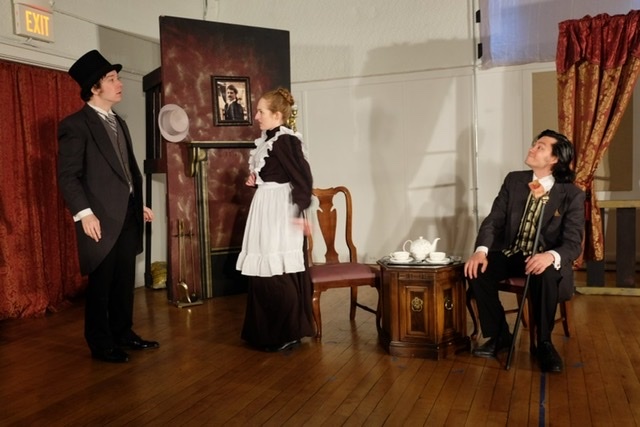
Photo by John Benfield
breakinglight11: (Default)
October Review Challenge, #12 - "What is the most sympathetic villain you've ever written?"

This one I struggled with a bit. This was the second one suggested by my friend Jonathan, and I probably would not have considered adding it on my own.

Being the English teacher I am, I like to establish a definition for a concept before I use it. Antagonists are the figures in the story trying to prevent the protagonist from reaching their goals, but villainy I would characterize as when an antagonist has malicious intentions or is specifically supposed to be in the wrong. I frequently use non-villainous antagonists for the purpose of having conflict that’s not so cut and dried as somebody doing a good thing versus doing somebody a bad thing. It’s a great way to introduce shades of gray and complication.

However, I do love a good villain. Particularly when they’re genuinely wicked. To the point where if I want them sympathetic, I tend to keep them more toward the mere antagonist side, and if I let me them a real villain, they tend to be pretty nasty. So this makes it a little tricky to pick one who I genuinely want you to feel for.

There’s barely a villain to be had, with the exception of the intentionally broad General Hacksaw from part three, in any of the first four episodes of Dream Machine. Instead, most of the conflict there is interpersonal, between characters who are varying degrees of wrong but ultimately trying their best. Mrs. Hawking has a new villain almost every show, but most of them are supposed to be embodiments of various Victorian social ills— misogyny, class predation, systemic abuse or neglect —and so are rarely meant to be sympathized with. In Adonis, the majority of the characters are AWFUL, some to the point of being gross, to create a sense of the brutal world.

What I do frequently have is people who are responsible for some horrible act that was in some part driven by their circumstances. I frequently write about social ills, particularly ones that create negative environments that force people into terrible positions. So I do often make use of villains whose actions are not defensible, but who likely would not be forced into such desperate conditions if not for the unfairness around them. Without spoiling them, the solutions to at least two of my mysteries— Hawking IV: Base Instruments and The Tailor at Loring’s End —factors this in heavily. Even a character like Elizabeth Frost in the second Hawking trilogy, easily one of my wickedest, has to fight through the impossible position her class crushed her into, and the hugely unfair expectations placed on her as a too-young governess to a girl only five years her junior.


So of course I like making the conflict one that has more dimensions than just good-guy-versus-bad-guy. But no-villainy is a path I more often take than sympathetic-villainy.
breakinglight11: (Default)
October Review Challenge, #10 - "What was a moment in your work that was easy to write?"

I have always suffered from the fallacy that things that were easier to write come out better, and things that are harder to write come out worse. This is IN NO DIMENSION true— often when something comes too easily, you aren't applying the same care or critical assessment to it that it requires to be the best it can be, and difficult-to-produce things often show evidence of the work that was put in. But damn, it can be a good feeling when something just FLOWS. Some of the purest joy I've ever had of the writing process was when something just struck me, and I couldn't type fast enough to get it out on the page.

I can think of several examples, each manifesting a little bit differently. I remember how easily the first five pages of Adonis came— the set up, the rhythm, the figures, the notions therein. I know very strongly what I wanted it to look like, and it kind of exploded onto the page. I did not, however, do a great job with them; a lot of how I wrote them wasn't really that evocative or effective, and I didn't realize at first because they came so easily. They required a fair bit of editing to really work, but it did feel good to get the first draft out so quickly.

Another striking example was in the development of Mrs. Hawking part IV: Gilded Cages. A lot of that play was drafted as part of 31 Plays in 31 Days 2016. There were two scenes dealing with Victoria and Reginald's relationship, from differing angles, that stand out in particular for this. One, where Reginald finally declares his feelings for her, came out a complete mess. I know what I wanted it to be, but I didn't know enough about the scenario to structure it properly, so my early drafting was awful. I'm pretty happy with the final version that made it into the play, but it took a lot of rewriting and development to fix it up. By contrast, I think of another scene where Mrs. Hawking is looking back on the Colonel and their stillborn, which burst forth from me fully formed, like Athena from the head of Zeus. Looking at it now, it's practically unchanged in the final version from that very first rough draft. I remember writing it in minutes, without effort. I just knew exactly what it had to be, and I shaped the scene around it to make sure it fit.

The most recent experience of this was the pilot episode of Dream Machine. As I put it on Facebook, "I am writing a new script at lightning speed that is totally out of my typical wheelhouse in time to make friends record this week because I want attention that doesn't involve interacting with other humans directly." Which pretty much sums it up. I slammed that script together in a week because I was feeling it so much, working on it to the exclusion of basically anything else. I had just gotten done making the "pitch" video for it just for fun, and it had me so inspired I dove in. It was so low-pressure and fun, and while it probably could use some polishing up, I think it came out pretty good. Since then Dream Machine has been a very enjoyable project, with the recording sessions with my hilarious cast being some of the highlights of this past dark year.

So, yeah, work that comes easily doesn't always mean it's come out good. But it sure feels nice every now and again.

Dream Machine Pilot
breakinglight11: (Default)
October Review Challenge, #8 - "What moment in your work is most ahead of its time?"

This prompt was suggested to me by my friend Jonathan, when I was first brainstorming the list. I confess most of my work is not exactly cutting-edge; I am partial to very conventional narrative styles, and while my viewpoints tend toward the progressive, my subject matter is rarely that far out there. But the most transgressive piece I have, by far, is Adonis.

aidaneyes


The central conceit is a gender-flipped ancient Rome, for the purposes of examining the destructive effects of objectification and instrumentalization— but where women perpetrate it on men rather than how in our world, it more often happens the other way around. The flip is to throw into sharp relief those things that we might take for granted, because we're so accustomed to seeing men perpetrate such things on women, but so rarely ever see the other way around.

It's a bit much for some people. Obviously a lot of people have a hard time even believing a man ever could be a victim of objectification or assault in that way. But others find it even more off-putting than when it happens to women— it violates too many gendered expectations, and the lack of inurement makes it too hard to take. But I think that's the point; by doing the flip, it doesn't let the horror of it just slide by because of your expectations. And I do think it's important to acknowledge that men can have their boundaries violated as well. Many men don't feel so vulnerable to it, but there are also many that do, and it's no less awful if their bodily autonomy is not respected. So while most of my work isn't that transgressive, I think this takes the most cutting-edge position of anything I've done so far.
breakinglight11: (Default)
October Review Challenge, #2 - "What is the best use of a reference in your work to another work?"

Reference as a narrative tool, as I teach in my literature classes, is when you mention specific concepts, stories, or cultural touchstones in order to evoke ideas in your audience, specifically by harnessing the memetic baggage they attach to those concepts or stories. I will make you think or feel certain things by connecting my story to references you already hold in your head that give you similar thoughts and feelings to the ones I’m aiming for.

While all work exists in the context of its influences and predecessors, I feel like a lot of mine is in direct response to the tropes characterizing particular genres, and often earlier works in specific. Hood is a modern reinterpretation of Robin Hood. Adonis is a spin on ancient epics and gladiator movies. Dream Machine is what I would do if I were allowed to make my own 30 Rock. And Mrs. Hawking is a clear response to Sherlock Holmes and Batman when issues of gender, imperialism, and classism are considered. (This is particularly interesting to me that Cari Keebaugh, the actress who plays Mrs. Hawking, is actually an English professor with expertise in intertextuality.) And that’s not even considering any of the direct adaptations I’ve done, like Pearls Mean Tears and Murders in the Rue Morgue with Jeremy Holstein, or my various works of fan fiction.

All this is to say I use reference a LOT, both direct and indirect. Direct is when you mention or all but mention the thing by name, like in Fallen Women, when Nathaniel and Mrs. H actually talk about the newly-released first Sherlock Holmes novel, with Nathaniel enjoying it and Mrs. H expressing disbelief that one person could know so much about so many subjects. Indirect is when you incorporate aspects of the reference more obliquely, like in Vivat Regina, when the client in disguise's entrance is structured like the entrance of the client in disguise in the Sherlock Holmes story A Scandal in Bohemia to echo the circumstances.

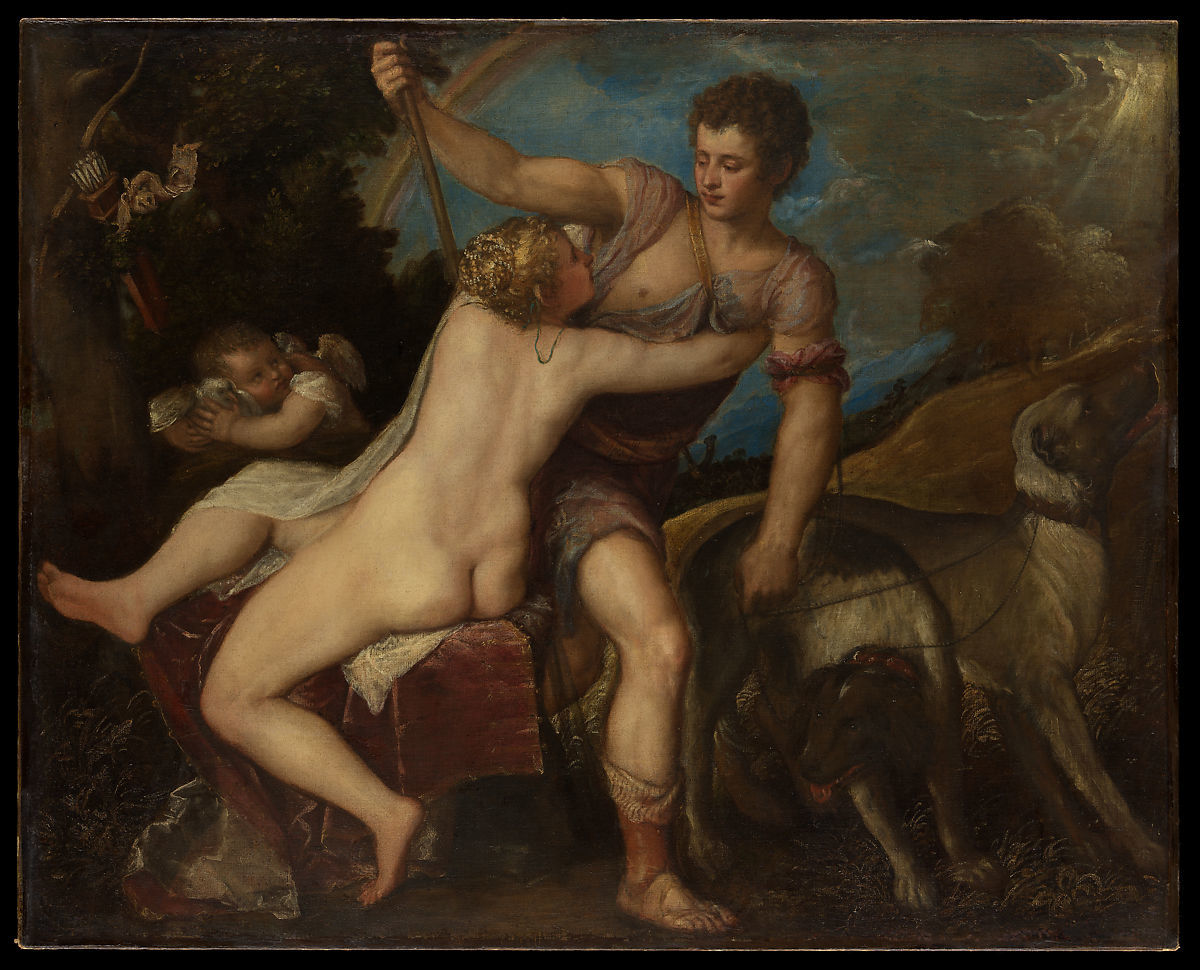
Venus and Adonis


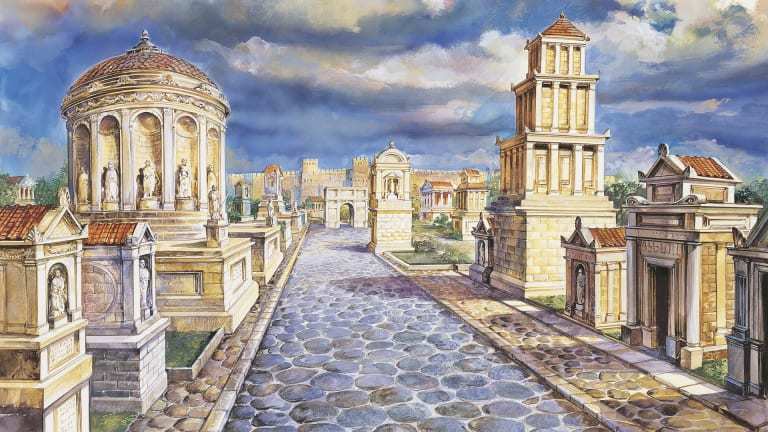
But I think the one I'm going to pick is the title of Adonis. I like it particularly because it's a reference that has layers of meaning to it, deeper the better you know it. The most obvious surface allusion is the common meme when people mention that name, a very beautiful young man— which, of course, the story is centered around. But if you look at the legend from which the name comes, it's about a beautiful young man who is pursued by Venus, a female goddess figure with much greater power than he has, and he's won as a prize. Again, directly relevant to our story. But if you look at the legend critically, and see the power imbalance and how Venus has to coerce a reluctant young man, the idea dawns that Adonis is actually a victim in a way that we seldom acknowledge men can be. And this, of course, is the heart of the matter. My very original inspiration for the work, all the way back in high school when I read Shakespeare's version, was thinking to myself "How is this not depicting a rape?" I love all those layers of significance that make more sense the better you understand the story.
breakinglight11: (Default)
Feeling a bit... creatively blocked, at least as far as my writing goes. I put my book, Adonis, aside while I was working on Fallen Women, the newest Mrs. Hawking play, and since then I’ve been preoccupied with the staging of it. But I haven’t done any writing since then, really, and more and more my thoughts turn to wanting to fix the currently disastrous state of that novel.

As it currently stands, it really isn’t very good. It’s maybe not garbage all the way through, but it’s overall fairly bad. I want to fix it, but frankly I’m not sure how. I’m having trouble conceiving of exactly what it needs. I tend to approach my editing with a high-level goal in my mind, and works towards that goal by feel. Like, “Nathaniel’s fear needs to be more in the subtext.” Or “the Ripper’s rant needs to be scarier.” Or whatever. But for this, while I know it’s not right, I don’t really know what right IS in most cases. I don’t have a direction for what I need the editing to achieve.

My friend Mark recommended Bernard Cornwell’s The Winter King as a reference for how to tell this kind of story, an Arthurian epic set just a little bit later in history. I enjoyed the book a lot, and I do think it’s a good model for the direction I should take rewriting my novel. But I’m struggling at how to synthesize my impressions of this book into a goal I can apply to my own work. I’m not sure what to shoot for because I can’t quite figure out how to name the effect I’m observing and would like to replicate.

I’m stressing out about it. I’m afraid I can’t write this story as well as I need to. I know I need to go through the drafting process, but when I don’t know what I’m aiming for, I don’t even know how to keep drafting. I’m feeling pretty discouraged.
breakinglight11: (Default)
Classes started for me this week, and since I still measure my life in semesters due to teaching college, it's a good time to take periodic stock.

I have five classes total, three at Lesley, two at North Shore, and one of the Lesley classes is online. They're all classes I've taught before, so I can reuse lesson plans, but I have to convert them into online materials for the last one. It will be a lot of grading, probably the most I've ever had at one time. But it'll be nice to be making a little more money, and I'm glad I can take a break from tutoring. The fact that I will not have evening classes is also something I'm grateful for, as I was really struggling with the summer teaching schedule I had.

I am almost done with the new Mrs. Hawking play, installment number six, though I am still mulling on the title. I was surprised to find that my early readers found the draft to be noticeably cleaner and closer to finished than previous versions, especially since I absolutely hated it in the drafting process. Maybe I really do have zero perspective on that in the midst of it. But I'm feeling much better about it now that I've gotten feedback and really useful, actionable suggestions for improvement. I think I should be able to finalize the draft within the next week or so.

Good thing, because now is the time to start preparations for the next round of Hawking production. We'll be debuting this new one this coming January, along with the reprise of last year's part V: Mrs. Frost. It's always a lot of work, but I like getting to build a new show, especially since the last few have interacted so interestingly with the previous show. It really lets us get a sense of the evolving story.

I've got a bunch of other writing projects to get going too, as soon as part 6 is settled. I need to edit the pilot of the Mrs. Hawking TV show in response to an executive I spoke to, which is my next big priority so I can get it to her in the next few weeks and she can look at it. I also want to work on editing my Adonis novel. Right now I'm concerned my worldbuilding efforts are coming off like a Wikipedia entry, or else are completely empty. I'm not sure how to fix that problem yet, but I know it will take some serious work.

I have started reading Bernard Cornwell's The Winter King on recommendation of my friend and writing mentor Mark. He thought it would serve as a good example for what I'm trying to do with my novel. I need to figure out how to give reader the scene-setting they need without drowning them in exposition.

My health is mostly good. I have been working out a lot and am in very strong, fairly sleek shape, though I've been eating a ton of sugar. Since the semester has started, I've made a resolution to cut back on the Coke and chai lattes, which are always my worst habit. I have been a little broken out on my chin, though, which makes me worried my beloved Curology treatment isn't working as well anymore. But it could also be due to the fact that I've been in a period of relatively high anxiety for a few weeks now. It's not at its peak anymore, but it's been a problem, leaving me pretty seriously burnt. Not a good way to start a new semester, but I actually think my schedule change will help. No evening classes and no long periods of having to sit in one place are much better suited to my lifestyle.

So overall I'm okay, except for the anxiety. I'm trying to get started on the right foot and make sure I'm not letting it make my good habits fall by the wayside. If I stay organized, I'll handle everything better.

Profile

breakinglight11: (Default)
breakinglight11

October 2025

S M T W T F S
   1234
567891011
12131415161718
1920212223 2425
262728293031 

Syndicate

RSS Atom

Most Popular Tags

Style Credit

Expand Cut Tags

No cut tags
Page generated Feb. 3rd, 2026 01:03 pm
Powered by Dreamwidth Studios